Find your frequency.

Rooms of moving light, each breathing with a hum you tune yourself. Drag up and down and it slides from 60 to 600 Hz, the picture following.

Tune it yourselfNot a number with a promise
Watch it moveThe room breathes with the hum
Pay onceNo subscription, no account
Coming soon to the App Store
Water
24rooms of moving light
60–600Hz, under your finger
£2.99once — then never again
Scroll
Nothing is played back

There are no recordings in this app.

While you listen, your iPhone works out the wave afresh

48,000
Times a second

A handful of pure tones, added together, for as long as you listen. There is no file of a bowl or a choir anywhere inside the app — the hum is arithmetic, which is why it can follow your finger.That is the rate on most phones and headphones.

What we noticed

Every frequency came with a promise.

Look for a hum to sit with and you find numbers with claims attached: 432 for a more natural tuning, 528 for repairing DNA, a set of “solfeggio” tones for guilt, fear and change. Sitting with a slow sound seemed genuinely pleasant. The claims are another matter — where they have been looked at, nothing has been shown, and most have never been studied at all.

So we didn't pick a number for you. We built a dial instead of a list, and put a picture on the end of it that moves with the sound. Drag until it feels right. That's the whole method, and we make no claim about what any frequency does.

What we did about it

A dial, not a list.

The dial came first: one gesture, anywhere on the screen. Then a room to look at while you listen, drawn live and wired to the sound so it swells as the hum breathes and takes its colour from the note. Everything else followed from those two.

60–600Hz

Under your finger

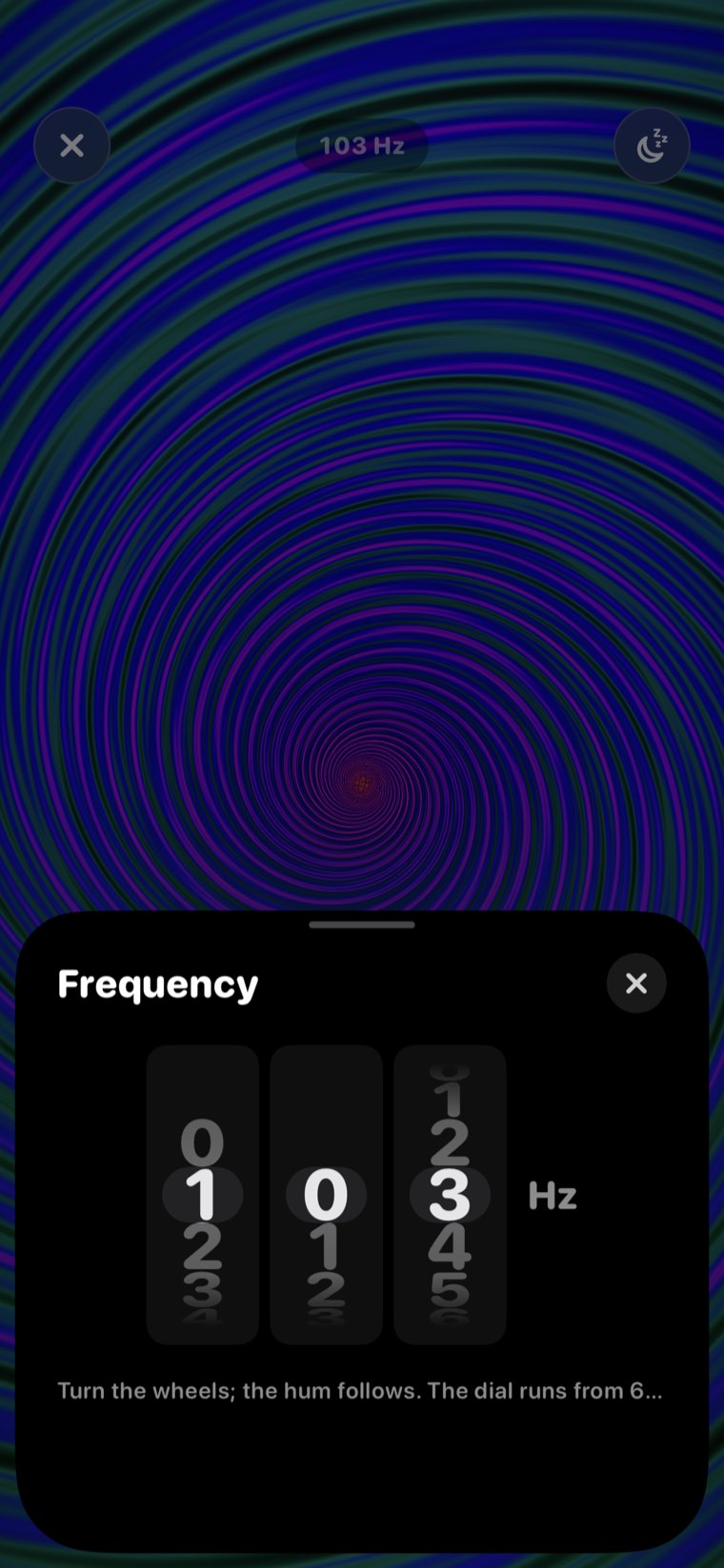
Drag up and down anywhere on a room and the hum slides across the whole decade, the picture following. Or tap the number at the top and dial one in exactly, on three number wheels.

24

Rooms, drawn live

Real-time graphics drawn by your iPhone, not videos. Tap to strike a singing bowl tuned to the hum; draw side to side to play a scale, each note its own colour; tilt the phone and some rooms lean with you.

0

Health claims

It is for relaxation and enjoyment, and it is not a medical device. The Learn pages set out what followers of each named frequency say, and then, separately, what has actually been found.

No account, no internet connection, nothing to buy inside it. You pay once, and the only thing it asks of you after that is what sounds right.

— Ricky Chopra, who made this

Don't take our word for it

Look at it.

Real screens from the app. The number at the top of every room is the hum; drag anywhere to move it. Turn the sound up — every room plays, and every room answers.

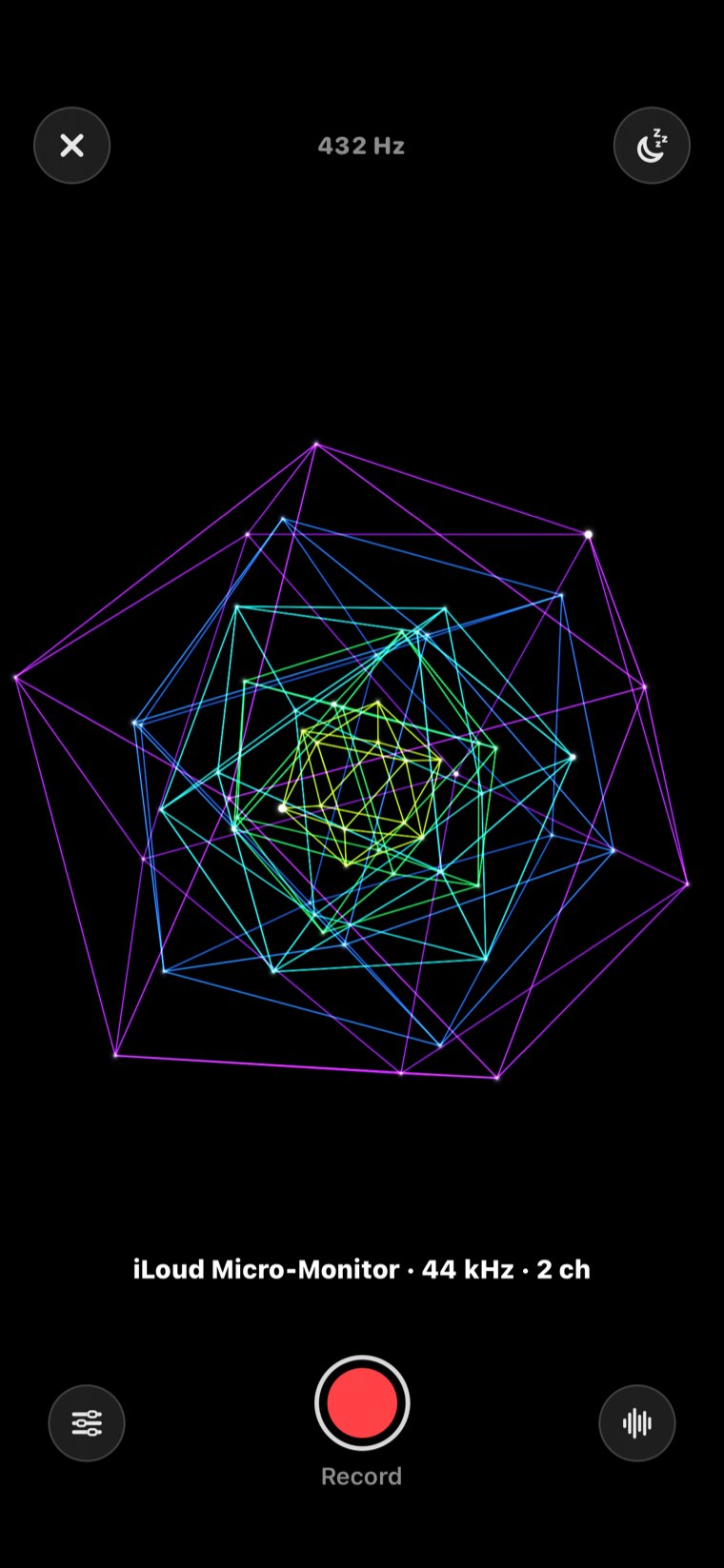
The Cage room at 432 Hz: nested outlines turning against one another
Drag up and downThe hum slides from 60 to 600 Hz under your finger, and the room follows.
The frequency sheet: three number wheels set to 103 Hz
Or dial it inTap the number at the top for three wheels, and set it exactly.
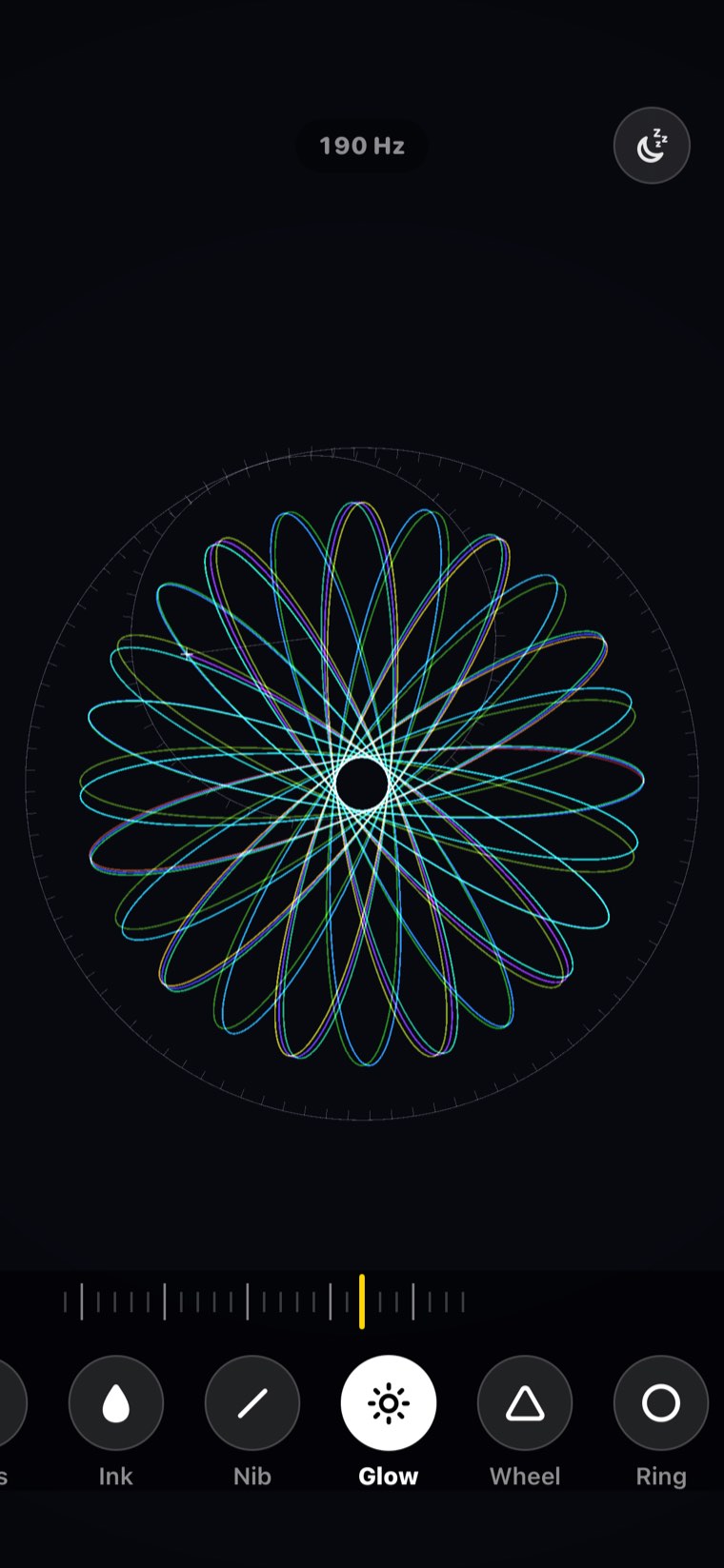
The Spiro room at 190 Hz with its tray open: Ink, Nib, Glow, Wheel and Ring
Then make it yoursEach room has a tray of its own. This is the Spiro room's.
The instrument

Make it your sound.

There are no recordings in this app. The hum is worked out while you listen — a handful of pure tones added together — and every slider in the sound tray is one part of that sum. Move them and it becomes a different instrument.

Warm

How the app starts. A few harmonics, a gentle beat, a little of the fifth and the undertones.

Pure

One clean tone, barely moving. The closest thing to a tuning fork.

Glass

Thin and high, with a long echo. Like a finger round the rim of a wine glass.

Drone

Low and heavy, deep in the undertones, breathing very slowly. Best in headphones.

Monk

Two voices, mouths closed, humming. Felt in the chest as much as heard.

Choir

Four voices singing an open aah, with room around them.

Reed

All eight harmonics at once: bright and buzzing, like an organ's reed pipes.

Dream

Soft, swaying slowly and a long way off. Pairs well with the sleep timer.

Eight sounds to start from. Each is only a way of setting the sliders — pick one, then move anything you like.

Tone

From the pure note alone up to eight harmonics sounding together. Low is a tuning fork; high turns reedy, like an organ.

Breath

The hum rises and falls like breathing, and the picture breathes with it — from one breath every fourteen seconds to one every three.

Drift

A second copy of the note, a hair apart, so the two slowly swell and fade against each other. It's what makes a sound feel alive rather than electronic.

Depth and Sub

The fifth above, for something open and wide, and undertones below. A phone can't play the lowest notes, so it plays the ones above them and your ear fills in the rest.

Voice, Vowel and Choir

A throat and a mouth: a hum that moves from mmm through ooh to an open aah, with up to four voices blending like singers.

Modulate, Rate and Echo

A gentle wobble in the pitch, up to a semitone, at the speed you choose — and an echo that repeats everything back, fading.

The bowl

Tap the picture to strike a singing bowl, tuned to your hum. Its high tones die in a second; the low one rings for five or more.

Save it, and sleep to it

Found one worth keeping? Save it under a name and it's in My sounds. The sleep timer fades the sound and the picture out over a minute, and the hum keeps playing if the phone locks first.

None of the eight is the right one. Pleasing is a matter of ear, and the sliders are all there so you can find your own.

The known frequencies

Some believe. Some don't. The dial is yours.

Some frequencies come with a following. For each, here is what its followers say, as fairly as we can put it, and then the record: what has been studied and what was found. Nothing here is medical advice, and we make no claim about what any frequency does.

432Hz
On the dial

They say

Instruments tuned so that A is 432 rather than the standard 440 sound warmer, and sit better with the body.

The record

440 became the standard in 1939, by committee, not by nature — so there is nothing sacred about it either. A couple of small studies found listeners reporting themselves slightly calmer at 432. Nothing settled, in either direction.

396Hz
On the dial

They say

The first of six “solfeggio” tones: it releases guilt and fear.

The record

The solfeggio set was assembled in the 1990s by two American writers, from a reading of a medieval hymn and a numerological pass over the Book of Numbers. The tones are not ancient and were never a tuning. What is claimed for each has not been studied.

417Hz
On the dial

They say

The second tone: it breaks up what is stuck and makes change possible.

The record

The same origin as 396, and the same record: nothing studied, nothing shown, in either direction.

528Hz
On the dial

They say

The third tone, and the famous one: transformation, and the repair of DNA.

The record

The DNA claim traces to one writer in the 1990s and has no evidence behind it — a strand of DNA has no note. Some people find 528 a good note to sit with, which is a different claim, and a fair one.

639 · 741 · 852Hz
Above the dial

They say

The last three solfeggio tones: connection, then expression, then a return to order.

The record

Unstudied, like the rest of the set. All three sit above the top of the dial, so the app can't play them — 528 and the dial's top, 600, are the near neighbours.

7.83Hz
Below the dial

They say

The Earth resonates at 7.83 Hz — the Schumann resonance — and tuning to it grounds you.

The record

The resonance is real: an electrical ringing between the ground and the sky, set going by lightning. But it's far below anything you can hear as a note, and nothing links it to how you feel. No dial goes that low.

40Hz
Below the dial

They say

Sound or light pulsing forty times a second stirs a brain rhythm of the same rate.

The record

This one has real research behind it — in mice, and in early human trials. It is early, and it is not a treatment. It sits just below the bottom of the dial.

Binaural beats
Not a number

They say

A slightly different note in each ear makes the brain “beat” at the difference, and that rate calms or focuses you.

The record

The beat is a real trick of hearing. Studies of what it does to mood are mixed, and small.

Singing bowls
In every room

They say

The ringing of a struck bowl settles the mind.

The record

Small studies find people report feeling calmer after sound meditation — which is what people report about most quiet sitting. The bowl in every room is tuned to your hum.

The one that isn't on any list. Drag until the hum feels like it belongs to you.

That number is yours, and it's the only one we would stand behind. The app's Learn pages carry all of the above, with a button that sets the hum to each number the dial can reach.
What's actually in it

Twenty-four rooms.

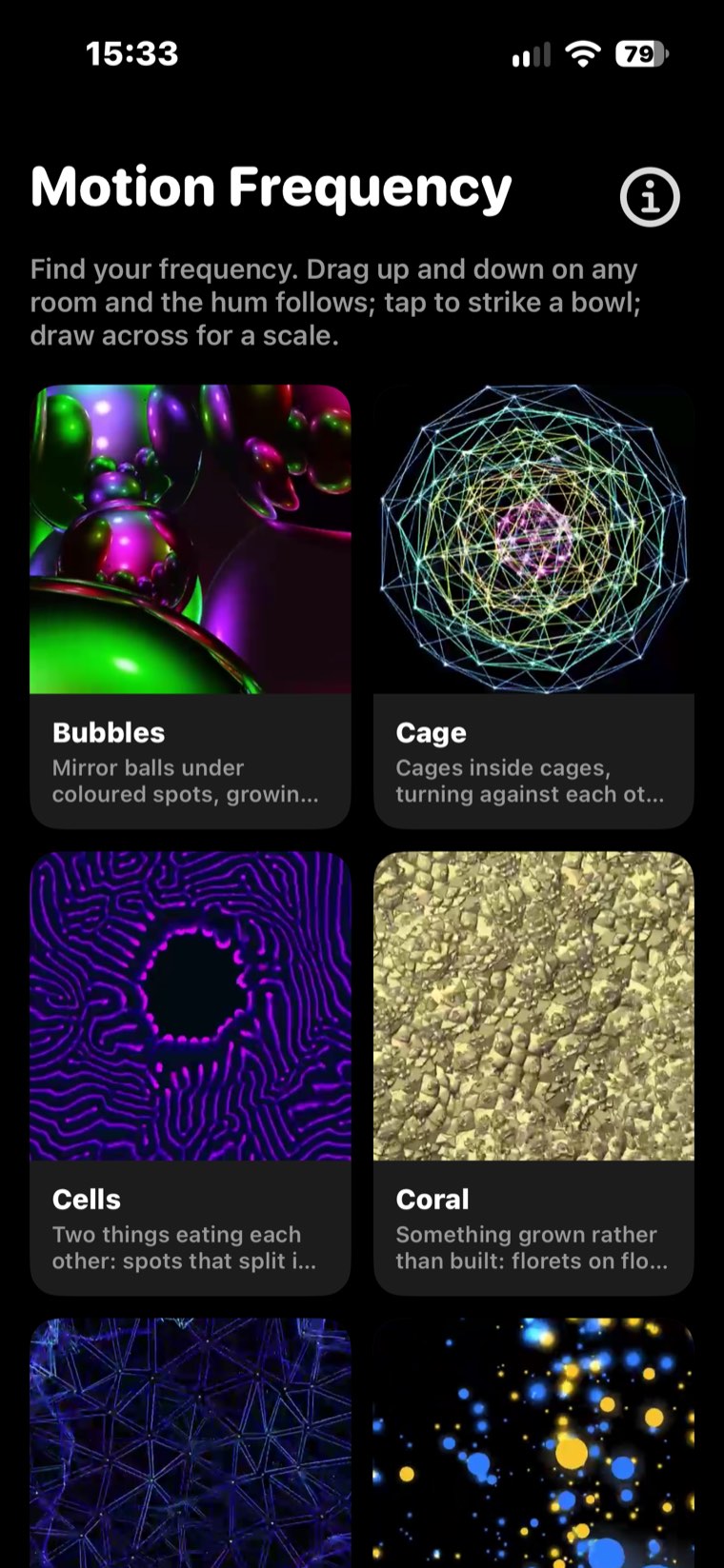
Every one drawn live on your iPhone, every one answering the sound. These are the clips from the app's own shelf, in its order.

01

Bubbles

Mirror balls under coloured spots, growing and popping

02

Cage

Cages inside cages, turning against each other, breathing through one another

03

Cells

Two things eating each other: spots that split in two, worms that crawl, mazes that close over

04

Coral

Something grown rather than built: florets on florets, from space folded over on itself

05

Crystal

A sphere of glowing cells, pushed into lobes, tumbling

06

Dots

A mirrored room of lights you tilt and shake

07

Fractal

A Julia set alive: spirals coiling and uncoiling, lit in relief

08

Hypno

Black and white rings interfering, moiré where they cross

09

Inkblot

Ink blooming on a card, mirrored

10

Knot

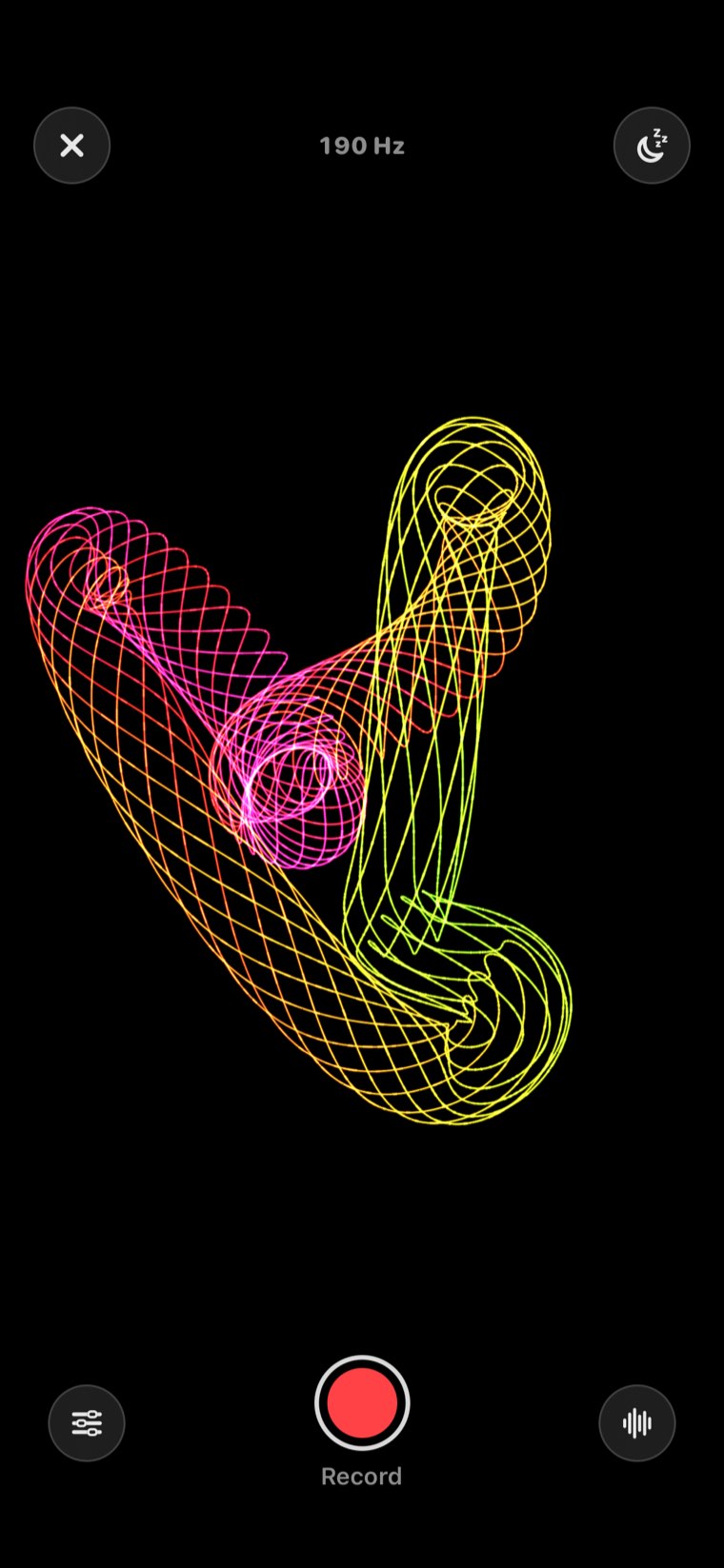
A loop of light tying and untying itself, a bundle of glowing strands

11

Labyrinth

An engraved cage of coiling straps, the far side showing through the near

12

Lights

A shape that breathes and twists, throwing off rays of light

13

Loom

String art growing in a honeycomb, every curve morphing with the hum

14

Mandala

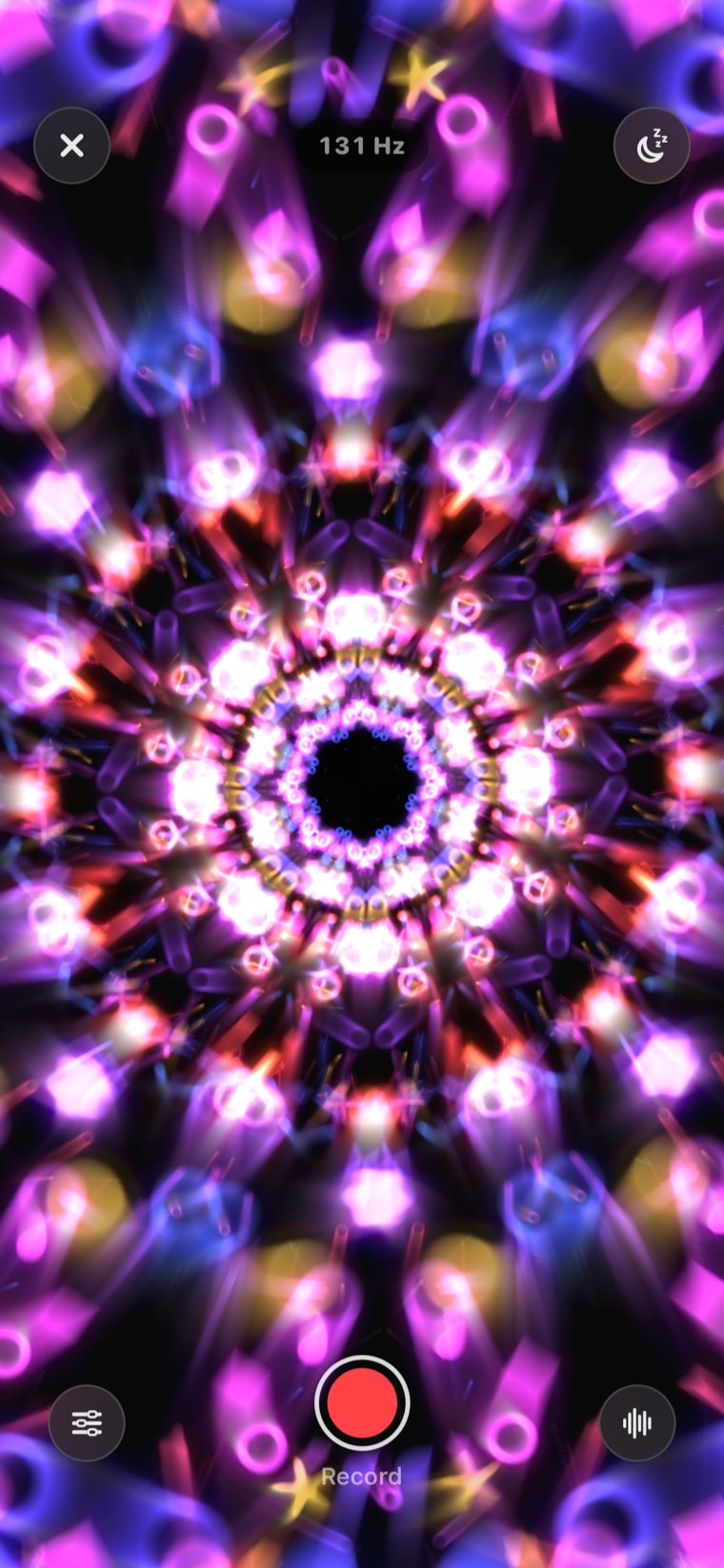
A thousand bright shapes born at the centre, flying out

15

Orb

The op-art ball, squares growing from its centre, lit and turning

16

Plate

Sand on a vibrating plate: the hum draws the figure, the sand walks to it

17

Plume

Fans of see-through petals opening and closing, mirrored; the light is where they overlap

18

Poles

A chequerboard poured into one point and out of another, shrinking to nothing where they meet

19

Spiral

Rainbow streaks in spiral arms, streaming out and turning

20

Spiro

The toothed ring, the wheel, the pen in its hole, going round and round

21

Torus

A chequered ring, its squares screwing endlessly into a hole they never reach

22

Vortex

A twisting tunnel of striped balls, and a light at the end

23

Water

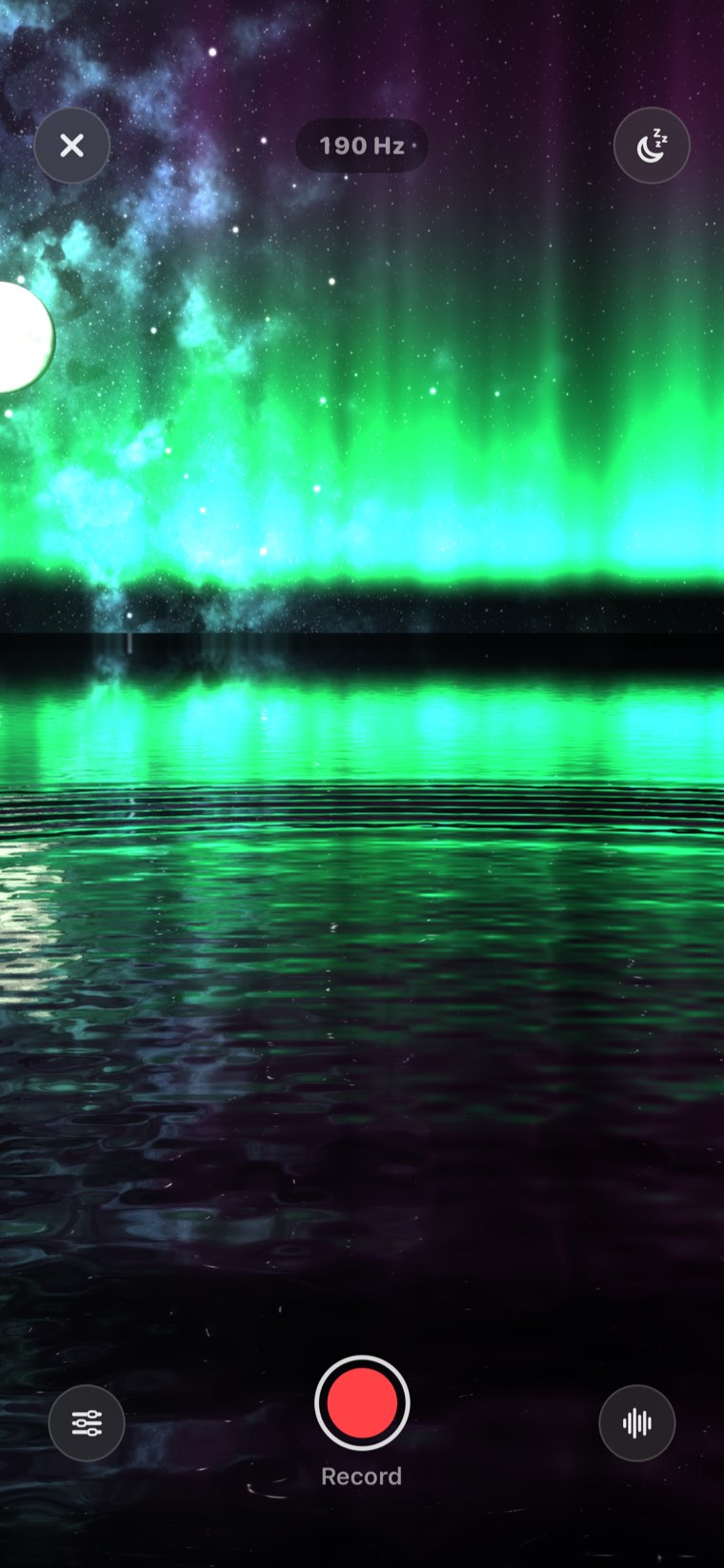
The Milky Way in black water, rippling to the hum

24

Wormhole

Fall forever down a tunnel of iridescent folds

What it knows

Nothing about you.

It needs no account and no internet connection, and it makes no network connections at all. The sound is made on your iPhone, the pictures are drawn on your iPhone, and what you record goes to your own photo library.

The Water room at 190 Hz: northern lights over still black water
Drawn on the phone, not streamed
The Knot room at 190 Hz: a loop of glowing strands
The sound is made on the phone too
The Mandala room at 131 Hz, with the record button below
Recordings go to your own photo library

We don't target you with it. We don't sell it. We hold no copy of it. There is nothing for us to hold.

No account, no analytics, no advertising, no crash reporting service and no third-party software kits of any kind — and no Motion Frequency server for anything to be sent to. The App Store handles the purchase; we never see your name, email address or payment details.

The sound is made on your phone

Every sound is generated on your iPhone while you listen. Nothing is streamed. The app doesn't use the microphone and never listens to you.

Tilt is used, then forgotten

Some rooms answer the phone being tilted or shaken. Those readings move the picture moment to moment and are never stored or transmitted.

Your recordings are yours

A recording goes to your photo library, in an album called Motion Frequency. The app keeps no copy, and it doesn't look at, read or analyse any of your other photos.

One thing kept, on the phone

The room and sound settings you choose to save, so each room opens the way you left it. That's the complete list, and deleting the app removes it.

No network connections

No analytics, no ads, no crash reporting, no third-party SDKs. It never needed the internet, so it works just the same on a plane.

Apple handles the money

It's bought once from the App Store. We never see your payment details, and refunds are Apple's to give, at reportaproblem.apple.com — you don't have to ask us.

The whole policy is short, and it's at polson.app/motionfrequency/privacy.

The offer

Find the note that feels right, then watch it move.

Twenty-four rooms, eight built-in sounds to start from, six short illustrated Learn pages, recording and a sleep timer — for one payment of £2.99. Nothing to subscribe to, nothing to buy inside it.

24 Rooms Each drawn live, each answering the hum
8 Built-in sounds Warm, Pure, Glass, Drone, Monk, Choir, Reed, Dream
6 Learn pages Who says what, and what was found
£2.99 Once, for everything No subscription, nothing renews
The Motion Frequency shelf: room tiles for Bubbles, Cage, Cells and Coral, each with a short description
The shelf — every room, playing on its tile
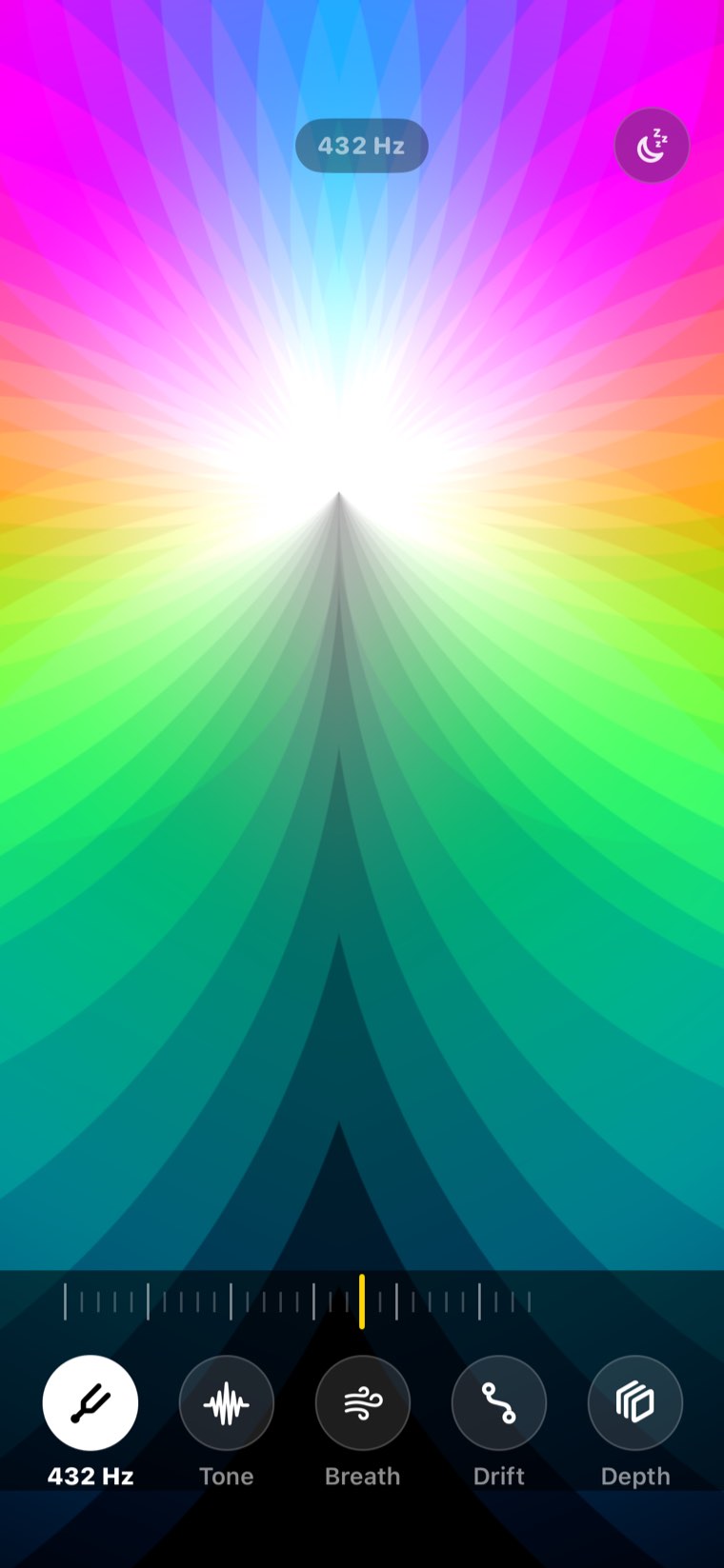
A room at 432 Hz with the sound tray open, showing Tone, Breath, Drift and Depth
The sound tray — Tone, Breath, Drift, Depth and more
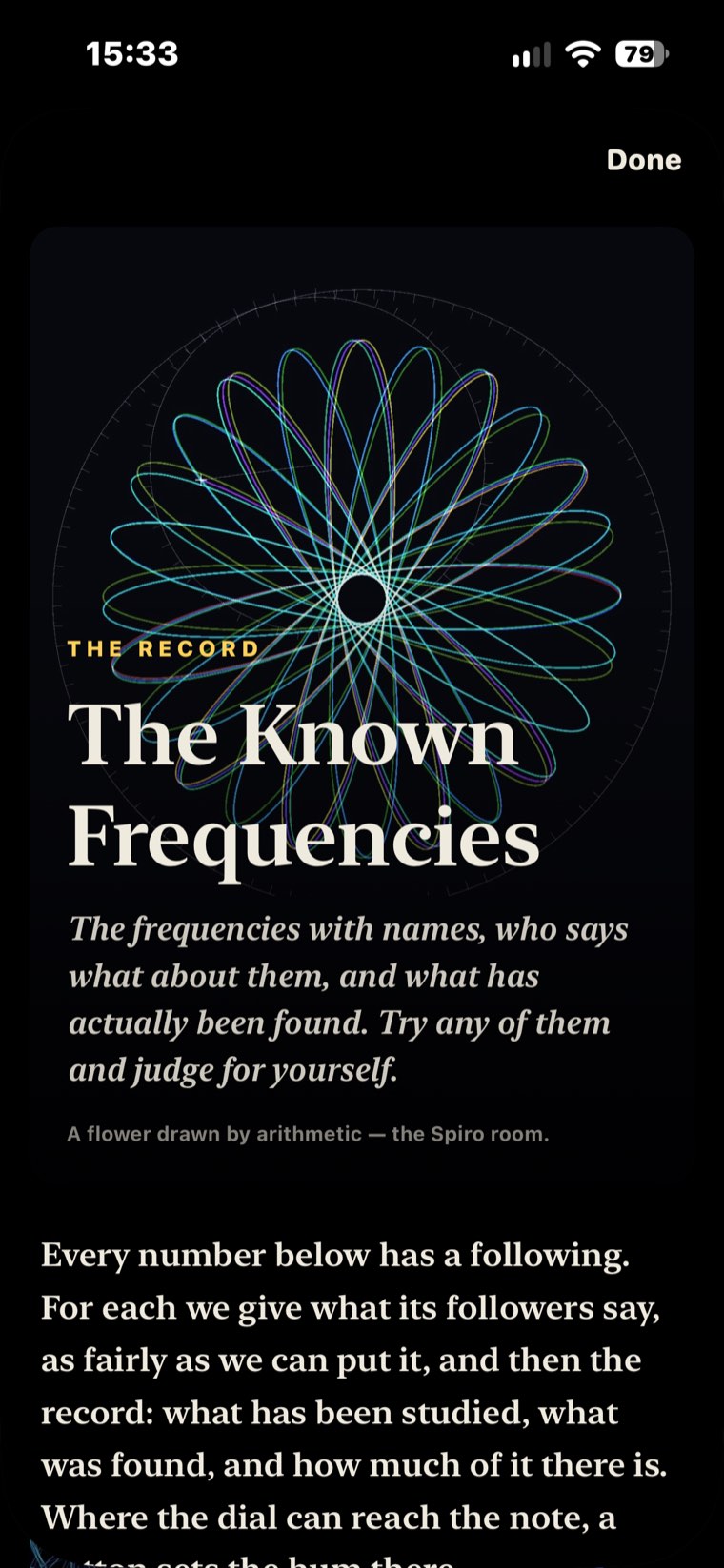
The Learn page The Known Frequencies: the frequencies with names, who says what about them, and what has actually been found
Learn — the claims and the record, side by side

Real screens, not mock-ups.

No subscription. Nothing renews.

Pay once. That's all of it.

One price for every room and every sound. There are no in-app purchases, so there's no better version waiting behind a second payment.

£0
Inside the app

Nothing else to buy

No packs, no premium rooms, no unlocks. What you pay for on the App Store is the whole app.

£2.99
Once. Not a subscription

Everything, for good

  • All twenty-four rooms and all eight built-in sounds
  • Record any room, with its sound, to Photos
  • Keeps playing with the screen locked
  • A sleep timer that fades sound and picture out over a minute
0
Accounts, ads or trackers

Nothing to sign in to

An iPhone running iOS 17 or later. Nothing else — no account, no internet connection, no special hardware.

Motion Frequency asks for one payment and then leaves you alone.

Price shown in GBP. The App Store sets its own price in each territory, so yours may differ — Apple shows it in your currency before you pay.

Before you start. The rooms flash, spin and change direction quickly, in strong colour and hard contrast. If you have epilepsy or have had a seizure, talk to your doctor before using the app; it shows a photosensitivity warning every time it opens. Motion Frequency is for relaxation and enjoyment, and is not a medical device. The full safety notes are in the terms.

Coming soon to the App Store